

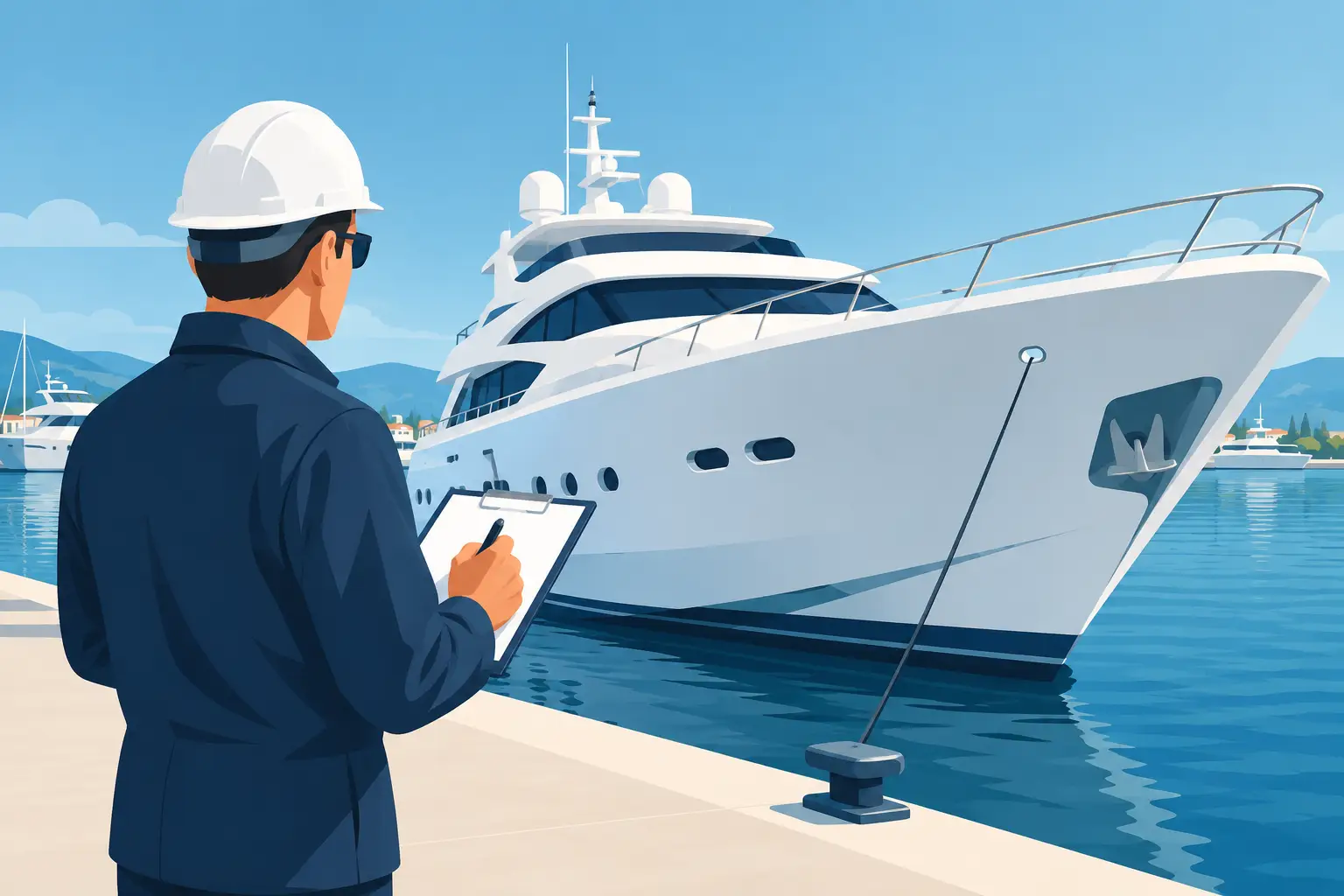
A yacht can present beautifully at berth and still carry costly unknowns below the waterline, behind finished joinery, or within its machinery spaces. That is why the question of when should yachts be surveyed is not a formality in a transaction. It is a decision that protects the buyer’s negotiating position, clarifies the vessel’s true condition, and helps ensure that a purchase reflects value rather than appearance.
For a serious buyer, the central answer is clear: arrange a full pre-purchase survey after agreeing the principal commercial terms, but before becoming unconditionally committed to the sale. Yet that is not the only occasion when a survey is warranted. Ownership changes, major refits, insurance requirements, damage events, and extended periods out of use can all justify fresh professional scrutiny.
When Should Yachts Be Surveyed in a Purchase?
The most consequential survey is the pre-purchase survey. It should take place once the buyer and seller have reached an agreement in principle on price, deposit, and the transaction timetable, with the purchase remaining subject to satisfactory survey and sea trial results.
This sequencing matters. Surveying too early, before the seller has accepted an offer, can create unnecessary expense and may give a buyer little practical control over access to the vessel. Waiting until after contractual contingencies have expired is far more dangerous. At that stage, a buyer may discover defects without having a clean route to renegotiate, require rectification, or withdraw.
A properly drafted purchase agreement should give the buyer adequate time to appoint an independent surveyor, arrange a haul-out, complete a sea trial, review reports, and decide whether findings are acceptable. On larger yachts, or yachts with complex systems and a substantial refit history, a short inspection window can be insufficient. The survey timetable should reflect the vessel, its location, yard availability, and the scope of due diligence required.
Before making an offer: conduct preliminary due diligence
A full condition survey is usually not appropriate before an offer is accepted, but a buyer should still investigate the yacht carefully. Review specifications, maintenance records, refit invoices, registration documents, class or flag documentation where applicable, and the vessel’s known operating history. A viewing with a knowledgeable broker can also reveal whether the yacht deserves a formal offer and further expense.
This preliminary work is particularly valuable in the pre-owned market. A yacht with a recent paint program, upgraded interiors, and attractive presentation may still have deferred engineering work. Conversely, a yacht that appears less polished in photographs may have exceptionally complete maintenance records and recent investment in machinery, navigation, or safety systems. The survey is there to verify condition, but the early review helps a buyer approach the survey with the right questions.
During the survey contingency period: inspect beyond the obvious
The standard pre-purchase process generally combines several examinations. A hull and condition survey assesses the vessel’s structure, systems, safety equipment, cosmetic condition, and general standard of care. A haul-out allows proper inspection of the underwater body, running gear, stabilizers, thrusters, transducers, through-hulls, and coatings. A sea trial provides evidence of how the yacht performs under load and can expose vibration, overheating, alarm faults, handling issues, or stabilization concerns that cannot be assessed alongside a quay.
For motor yachts, an engine and generator survey is often a separate specialist assignment. This may include engine diagnostics, fluid sampling, review of service history, and, where justified, borescope inspection. On sailing yachts, rig inspection deserves similar attention, particularly where the standing rigging is approaching replacement age or the yacht has an ambitious cruising or racing history.
The scope should match the yacht. A 70-foot cruising yacht with conventional systems does not require the same specialist team as a 40-meter motor yacht with commercial-grade equipment, sophisticated AV systems, dynamic positioning, stabilization, watermakers, and extensive crew operations. The goal is not to create a needlessly burdensome process. It is to inspect the assets and systems that materially affect safety, usability, value, and future expenditure.
Survey Timing Can Affect Negotiation
Survey findings are not automatically a reason to abandon a purchase. Every pre-owned yacht will have defects, maintenance recommendations, and items approaching their service interval. The decisive question is whether the findings are proportionate to the yacht’s age, asking price, claimed maintenance history, and intended use.
A clear survey report gives a buyer options. Some items may be rectified by the seller before closing. Others may justify a price adjustment, a retention held until work is completed, or a revised delivery condition. Findings that indicate structural concerns, substantial machinery risk, incomplete documentation, or a pattern of neglected maintenance may warrant a more fundamental reassessment.
The best negotiations remain factual and measured. A long list of minor cosmetic observations should not be treated like a major propulsion issue. Equally, a seller should not dismiss meaningful findings simply because the yacht has been maintained by crew or has completed a recent refit. Independent evidence creates a more productive discussion and protects both parties from assumptions.
Other Times a Yacht Should Be Surveyed
A pre-purchase survey is essential, but responsible ownership also calls for surveys at specific moments in the yacht’s life cycle.
Before listing a yacht for sale
Owners considering a sale can benefit from commissioning a condition survey or pre-sale inspection before the yacht enters the market. This is not always necessary, especially for a well-documented yacht with recent yard records, but it can be a wise choice when the owner wants to present the vessel with greater confidence.
A pre-sale survey gives the owner time to resolve defects privately, organize missing records, and price the yacht with a realistic understanding of its condition. It can also reduce surprises once a qualified buyer begins due diligence. In a premium brokerage sale, transparency does not diminish value. It supports credibility and helps preserve momentum through closing.
After a major refit or extended yard period
Refits add value when they are well planned, properly executed, and fully documented. They can also introduce risk if new equipment has not been commissioned correctly or if the work has involved complex structural, electrical, or machinery modifications.
After a significant refit, an independent inspection can verify workmanship, confirm that systems operate as intended, and identify any outstanding warranty items before the yacht returns to regular use. This is especially prudent after repowering, major generator work, stabilization upgrades, hull repairs, extensive electrical changes, or alterations to the yacht’s layout.
The same principle applies after a prolonged lay-up. A yacht that has spent months or years inactive may require more than routine recommissioning. Seals, hoses, batteries, air-conditioning systems, electronics, fuel, and safety equipment can all be affected by inactivity, even when the yacht has been stored at a reputable facility.
Following grounding, collision, flooding, or lightning damage
Any incident involving impact, water ingress, or electrical surge should prompt an appropriately scoped survey. Visible damage is rarely the whole story. A grounding can affect shafts, struts, rudders, propellers, hull structure, and watertight integrity. Flooding may compromise electrical systems well after the immediate event, while lightning can damage electronics in ways that are difficult to identify without detailed testing.
Insurance surveyors may be involved, but an owner should also ensure that the inspection addresses the yacht’s long-term reliability and resale record. Complete repair documentation, photographs, invoices, and post-repair testing will matter to a future buyer.
For insurance, financing, and operational confidence
Insurers commonly require a condition and valuation survey at intervals based on the yacht’s age, value, type, flag, cruising area, and claims history. Five years is a familiar reference point for many older pleasure yachts, but there is no universal schedule. Some policies require more frequent assessments, while newer or classed yachts may follow a different framework.
Financing institutions may also request a survey and valuation before lending against a yacht. Even where neither an insurer nor lender requires one, owners often choose periodic surveys as a disciplined way to plan capital expenditure. This is particularly sensible for yachts operating internationally, yachts maintained by changing crew teams, and vessels approaching significant machinery or rigging milestones.
Choosing the Right Surveyor and Scope
Independence is fundamental. The surveyor should be selected by the buyer or owner, not assigned by the seller, yard, or a party with a financial interest in the result. Relevant experience matters as much as formal credentials. A surveyor familiar with composite sailing yachts may not be the right choice for a steel displacement motor yacht, just as a general condition surveyor may need specialist support for complex engines, high-voltage systems, or commercial compliance.
Ask in advance what the inspection includes, what requires separate expertise, whether the report will prioritize findings by severity, and how quickly it will be delivered. Confirm practical arrangements as well: haul-out costs, yard access, sea trial permissions, fuel, crew availability, and who will attend. A well-organized survey day avoids rushed decisions and ensures the buyer receives the evidence needed to proceed with confidence.
For cross-border transactions in the East Mediterranean, documentation deserves particular care. Registration, VAT status, ownership chain, flag requirements, import history, and equipment compliance can all affect a yacht’s commercial attractiveness and the ease of future resale. These are not substitutes for a technical survey, but they belong within the same disciplined due-diligence process.
A yacht survey is most valuable when it is treated as a decision-making tool rather than a last-minute obstacle. With the right timing, the right specialists, and a transaction structure that preserves room to act on the findings, buyers can move forward with clarity. AlphaOceanic’s personalized brokerage guidance is designed to keep that process orderly, discreet, and aligned with the standards expected of a significant yacht acquisition.