

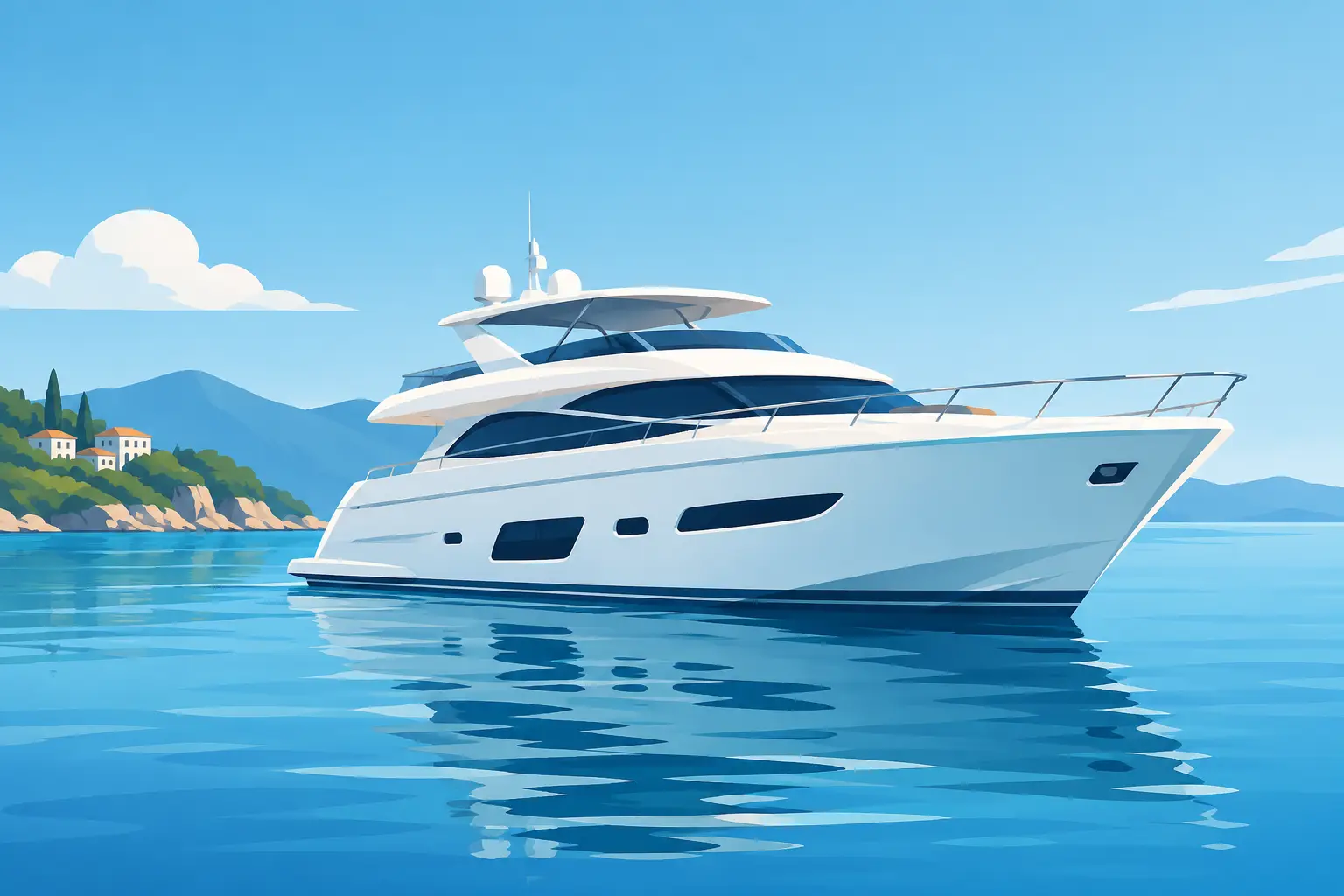
A motor yacht can appear exceptional at the dock and still be the wrong acquisition. Glossy teak, fresh upholstery, and a respected builder name are meaningful, but they do not answer the questions that protect a buyer’s capital: Has the yacht been maintained to the right standard? Does her layout suit the way the owner will actually cruise? Is her asking price supported by condition, specification, and comparable sales?
For buyers considering motor yachts in the East Mediterranean or further afield, the most successful purchases begin with a clear brief and disciplined evaluation. A yacht is both a highly personal environment and a complex technical asset. The right vessel should deliver pleasure from the first season while remaining practical to operate, defensible at resale, and appropriate for the owner’s intended use.
Motor yachts are not a single category
The term motor yacht covers a remarkably broad range of vessels. A 65-foot flybridge designed for family island cruising has little in common with a 120-foot semi-displacement yacht intended for extended passages with professional crew, even if both offer refined interiors and generous exterior living spaces.
Hull form is often the first distinction. Planing yachts provide higher speeds and an energetic cruising experience, but fuel consumption, engine loading, and comfort in certain sea states require careful consideration. Semi-displacement yachts typically offer more measured cruising speeds, longer range, and a reassuring motion offshore. Full-displacement designs favor range, volume, and comfort, particularly for owners who value longer itineraries over speed.
The choice is not simply technical. It shapes where the yacht can go, how often she will be used, the size of crew required, and the annual operating profile. An owner planning weekends between Athens, the Cyclades, and the Peloponnese may prioritize speed and shallow-draft flexibility. A family considering longer summers across Greece, Italy, and Croatia may place greater value on range, storage, stabilizers, and guest comfort underway.
Begin with the owner’s real cruising brief
A precise buying brief prevents attractive but unsuitable yachts from consuming time and attention. Before reviewing individual candidates, define the expected cruising grounds, number of guests, crew preferences, desired cruising speed, and degree of owner involvement in daily operation.
Accommodation deserves more scrutiny than a simple cabin count. A four-cabin yacht may be ideal for two couples and children, yet feel constrained when the owner regularly hosts adult guests or employs a permanent chef and stewardess. Consider en suite access, headroom, sound insulation, crew separation, galley workflow, laundry capacity, and the relationship between interior and exterior social areas.
The aft deck, foredeck, beach club, and flybridge all have different value depending on the owner’s habits. For some, a shaded aft deck that seats ten for dinner is essential. For others, a protected upper deck helm and enclosed salon matter more because the yacht will be used early and late in the season. A highly polished interior has limited value if the exterior arrangement does not support the life the owner intends to lead aboard.
Performance should match the itinerary
Published top speed is rarely the decisive number. More useful figures include comfortable cruising speed, fuel burn at that speed, range with sensible reserve, and handling characteristics in the conditions likely to be encountered. Engine hours must also be read in context. Regular, properly documented use can be preferable to long periods of inactivity, particularly where machinery and onboard systems are concerned.
A thoughtful broker will help translate a lifestyle brief into a manageable shortlist. This is particularly valuable in the pre-owned market, where each yacht has a distinct maintenance history, equipment level, refit record, and ownership story.
Assess condition beyond the presentation
A well-presented yacht deserves attention, but cosmetic appeal must never replace technical due diligence. The purchase process should establish not merely whether a yacht is beautiful, but whether her structure, machinery, systems, and documentation justify the investment.
The survey and sea trial are central to this work. An independent surveyor should be selected for the yacht’s type, construction, and age. Depending on the vessel, the assessment may include hull moisture readings, ultrasonic thickness testing, inspection of running gear, electrical systems, air conditioning, hydraulics, safety equipment, and stabilization systems. For metal yachts, coating condition and corrosion control warrant particular care. For GRP yachts, attention should extend to structural repairs, signs of osmosis, and the condition of through-hulls and underwater appendages.
The engine survey should be equally rigorous. Service records, oil analysis, diagnostic reports, cooling systems, exhaust components, gearbox history, and generator maintenance all contribute to a clearer view of the machinery’s condition. A lower purchase price can quickly lose its appeal if major engine, generator, or stabilization work is waiting just beyond completion.
Refit history can add value, but details matter
A recent refit may substantially improve a yacht’s appeal and market position, provided the scope is documented and the work was completed to a professional standard. There is a meaningful difference between new soft furnishings and a refit that includes machinery overhaul, new navigation electronics, upgraded AV systems, plumbing renewal, repainting, or replacement of teak decking.
Request invoices, specifications, warranty information, and photographs where available. Ask who performed the work and whether it was completed at a recognized yard. Documentation is not administrative clutter. It is evidence of stewardship and can materially influence resale confidence.
Understand the full cost of ownership
The acquisition price is only one element of a motor yacht purchase. Annual expenditure will vary according to size, age, location, crew structure, usage, and technical complexity. Fuel, berthing, insurance, maintenance, winter storage, class-related obligations where applicable, crew salaries, consumables, and periodic yard periods should all be considered before an offer is made.
Older yachts can offer exceptional volume and pedigree for the purchase price, but they may demand a larger maintenance reserve. Newer yachts may benefit from more current systems and lower immediate refit requirements, though their capital cost can be higher. Neither route is inherently better. The right decision depends on whether the buyer prefers to invest upfront for modernity or allocate capital over time to a carefully planned improvement program.
A realistic operating budget also protects the ownership experience. It allows maintenance to be performed on schedule rather than deferred, preserving safety, reliability, and eventual marketability.
Pedigree and resale deserve attention from day one
A yacht should first satisfy the owner, but resale liquidity remains relevant. Established builders, coherent design, desirable cabin configurations, dependable engineering, and a consistent maintenance record generally support stronger buyer interest when the time comes to sell.
Location can influence market response as well. A yacht based in the East Mediterranean may appeal strongly to buyers seeking immediate access to Greece, Turkey, Croatia, or Italy, particularly when her tax status, flag documentation, and compliance records are clearly organized. Conversely, a restricted viewing location or incomplete paperwork can narrow the buyer pool.
Price should be informed by comparable yachts, not only by the seller’s expectations or a listing’s original asking figure. Comparable analysis requires nuance. Age, engine hours, refit investment, build quality, equipment, VAT position, and the urgency of a seller can all affect value. The strongest negotiation position comes from knowing which differences are cosmetic and which will affect cost, usability, or future saleability.
The value of personal representation
A serious yacht transaction involves more than arranging viewings. It calls for careful coordination between buyer, seller, surveyors, legal advisers, flag and registration specialists, insurers, captains, and sometimes multiple co-brokers across jurisdictions. Confidentiality, timing, and clear communication are especially important in high-value transactions.
Professional S&P yacht brokers bring structure to this process: refining the brief, identifying credible opportunities beyond visible listings, reviewing documentation, coordinating inspections, supporting negotiation, and managing the steps toward closing. At AlphaOceanic, this work is approached as bespoke care rather than a volume exercise, with direct guidance shaped around the client’s priorities.
The best motor yacht is rarely the one with the loudest specification or the most dramatic first impression. It is the yacht whose condition, capability, ownership profile, and character remain convincing after the excitement of the first viewing has passed. That is the standard worth carrying into every serious purchase decision.