

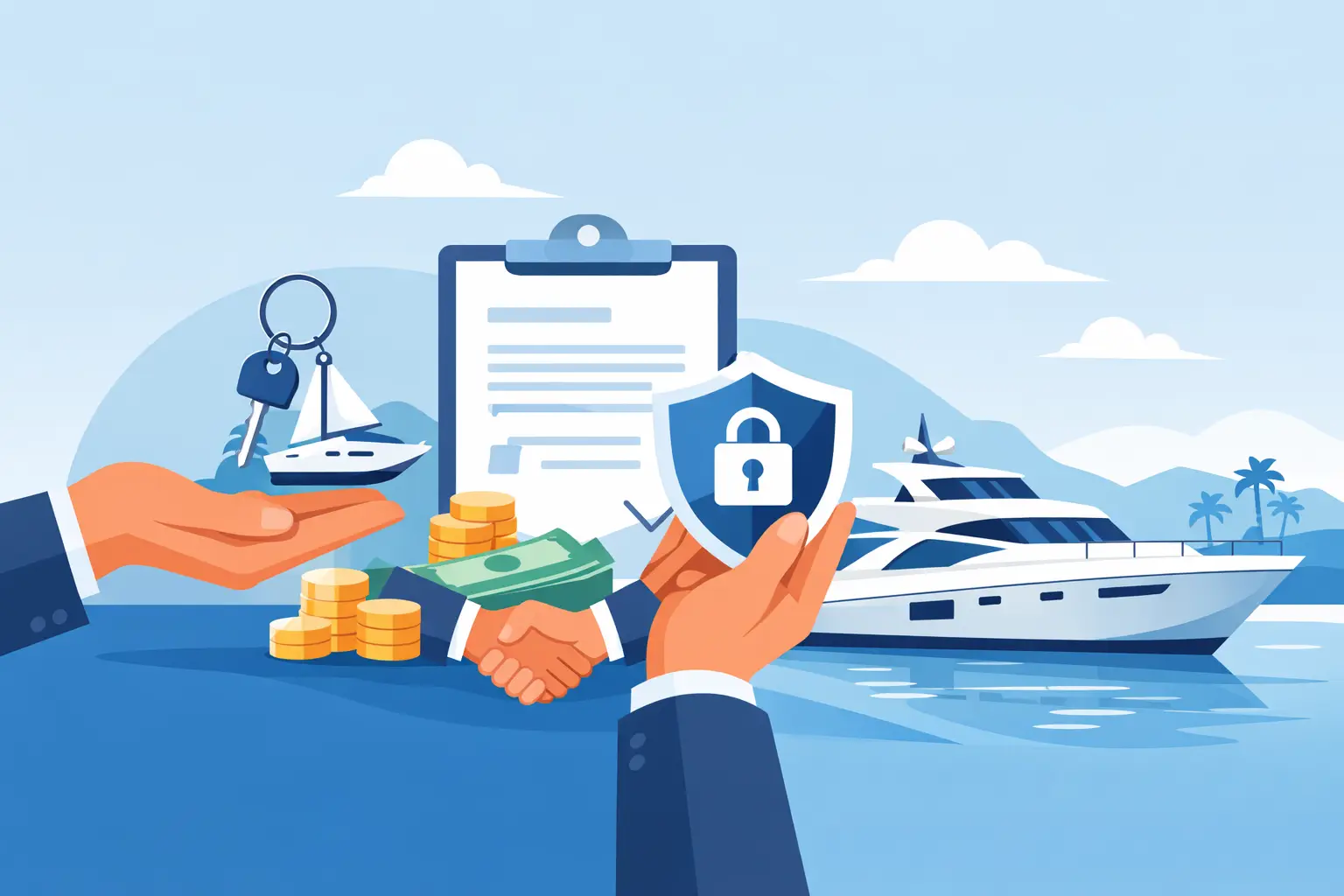
A serious yacht purchase can move quickly once the right vessel appears, but speed should never come at the expense of control. The yacht escrow process is the financial and documentary framework that keeps a transaction orderly while surveys, negotiations, title checks, and closing requirements are completed. For buyers and sellers handling a high-value yacht across borders, it is one of the clearest safeguards available.
Escrow is not simply a place where money waits. Properly administered, it creates a documented chain of custody for the deposit and purchase funds, sets conditions for their release, and helps both parties proceed with greater confidence. The precise structure depends on the purchase agreement, flag, ownership entity, and jurisdiction, but the principle remains constant: no party should be asked to surrender money, title, or possession without agreed protections.
What Is the Yacht Escrow Process?
In a brokerage transaction, an independent and properly qualified escrow holder receives and holds funds on behalf of the buyer and seller. Those funds are released only in accordance with the signed purchase agreement and written closing instructions. The escrow holder may be a specialist marine escrow company, a maritime law firm, a title company, or another approved professional, depending on the transaction structure.
The process usually begins after the buyer has submitted an offer and the seller has accepted it, subject to clearly stated terms. A deposit is then transferred to the designated escrow account. It is not paid into a broker’s operating account, nor should it be sent to an individual seller without a carefully considered legal structure.
That distinction matters. A yacht may be registered in one country, berthed in another, owned through a company in a third, and purchased by a buyer based elsewhere. Escrow provides a disciplined center point for a transaction that can otherwise involve several legal systems, banks, insurers, surveyors, and registration authorities.
The Yacht Escrow Process, Step by Step
1. The agreement identifies the escrow holder
Before funds move, the purchase agreement should name the escrow holder, the account details, the currency, and the conditions governing deposit and release. The agreement should also address what happens if the survey reveals a material issue, if the seller cannot provide clean title, or if either party fails to meet an agreed deadline.
The escrow holder should be independently verified. Buyers should confirm the entity’s identity, professional standing, account instructions, and internal controls through known contact details, not solely through emailed payment instructions. Cyber fraud involving changed bank details remains a real risk in yacht transactions, particularly where multiple parties are exchanging documents across time zones.
2. The buyer places the deposit
Once the agreement is executed, the buyer sends the deposit by wire transfer to the escrow account. The amount varies by deal and market practice, but it is commonly expressed as a percentage of the purchase price. The escrow holder confirms receipt to the parties and, where applicable, the broker.
At this point, the yacht is generally taken off the active market or marked as under offer, subject to the agreement. The buyer gains a defined period for due diligence, while the seller receives evidence that the buyer is committed to moving forward. Neither party should assume that a deposit is automatically nonrefundable. Its treatment depends on the precise contingencies and notice provisions in the contract.
3. Due diligence, survey, and sea trial proceed
Escrow allows the technical and legal review to take place without requiring the seller to rely on an unsecured promise of payment. The buyer can arrange a condition survey, sea trial, valuation where needed, and review of maintenance history, refit records, class documentation, and onboard equipment inventories.
Legal due diligence is equally significant. The reviewing team may examine registration records, ownership documents, corporate authority to sell, recorded mortgages or liens, VAT status, import history, and any restrictions affecting transfer. A well-presented yacht with an impressive refit history can still present a closing issue if its title trail is incomplete or its ownership structure has not been correctly documented.
If the purchase agreement gives the buyer a right to reject the yacht following survey or sea trial, the buyer must follow the agreed notice procedure precisely. Missing a deadline, using an informal notice method, or failing to specify the contractual basis for rejection can create unnecessary dispute. This is where experienced brokerage coordination and maritime legal advice become particularly valuable.
4. The parties resolve conditions or renegotiate
Most serious survey findings do not end a transaction. They lead to a practical discussion. The seller may agree to complete repairs, offer a price adjustment, provide a credit at closing, or demonstrate that an item is already scheduled for attention under a service arrangement.
The decision depends on the nature of the finding. Cosmetic wear in a teak deck is different from a structural concern, an overdue major engine service, or an unresolved deficiency in safety equipment. Any revised commercial understanding should be recorded in writing, including who will perform work, by when, and what evidence will be provided before closing.
Escrow funds remain protected while those points are addressed. This gives both parties room to make a measured decision rather than forcing a choice between accepting uncertainty and losing control of the deposit.
5. Closing documents and funds are coordinated
Once conditions are satisfied or waived, the closing phase begins. The seller prepares the transfer documents, which may include a bill of sale, deletion certificate or transfer authority, board resolutions for a corporate owner, mortgage releases, and delivery documentation. The buyer prepares any ownership-company documents, registration materials, insurance confirmations, and remaining payment instructions.
The escrow holder receives the balance of the purchase price and confirms that the agreed closing package is complete. It then follows written closing instructions, often releasing funds only once executed transfer documents and any required lien releases are in hand. In a cross-border deal, the sequencing can be highly specific. For example, a registration deletion may need to occur before the new flag registration can be completed, while physical delivery may be scheduled in a separate port.
The key question is not merely whether the seller has signed a bill of sale. It is whether the buyer receives the documentation necessary to obtain valid ownership and registration, free of undisclosed claims, in the intended jurisdiction.
What Escrow Does Not Replace
Escrow is a protection mechanism, not a substitute for expert diligence. It does not assess hull condition, verify whether an engine survey is sufficiently thorough, confirm the commercial value of a refit, or determine the tax consequences of an import arrangement. It also cannot cure poor contract drafting after a dispute has begun.
A properly managed transaction brings several disciplines together: a broker who coordinates commercial terms and access to the yacht, an independent surveyor for technical assessment, a maritime attorney for jurisdiction-specific legal issues, and an escrow holder for controlled movement of funds and documents. For complex ownership structures or yachts trading between the United States, the European Union, and the East Mediterranean, that coordination should begin early rather than days before delivery.
Questions Buyers Should Ask Before Sending Funds
Before authorizing a wire transfer, a buyer should have clear answers to several practical questions:
- Who is the escrow holder, and how has its identity and account information been independently verified?
- What exact event permits release of the deposit to the seller, or return of the deposit to the buyer?
- Which survey, title, financing, registration, or insurance contingencies remain open?
- What documents must be delivered before the purchase funds are released?
- If a dispute arises, what does the agreement require the escrow holder to do with the funds?
These questions are not a sign of mistrust. They are the standards of a well-run purchase. Sellers benefit from the same clarity because it distinguishes a qualified buyer from an inquiry that may never reach closing.
Discretion and Structure Matter at Every Stage
For many yacht owners, the most sensitive aspects of a sale are not the asking price or delivery date. They are the identity of the buyer, the handling of financial information, the timing of a public registration change, and the protection of an asset during transfer. Escrow supports discretion by limiting the unnecessary circulation of sensitive payment details and keeping the transaction governed by formal instructions.
At AlphaOceanic, bespoke brokerage support means treating escrow as part of the overall transaction strategy, not as an administrative afterthought. The appropriate escrow arrangement should reflect the yacht, the flag, the ownership structure, and the parties’ agreed path to closing.
A yacht should be chosen for its build quality, capability, condition, and the life it will make possible. The transaction behind it deserves the same level of care: clear instructions, verified professionals, and funds released only when the agreed protections are in place.