

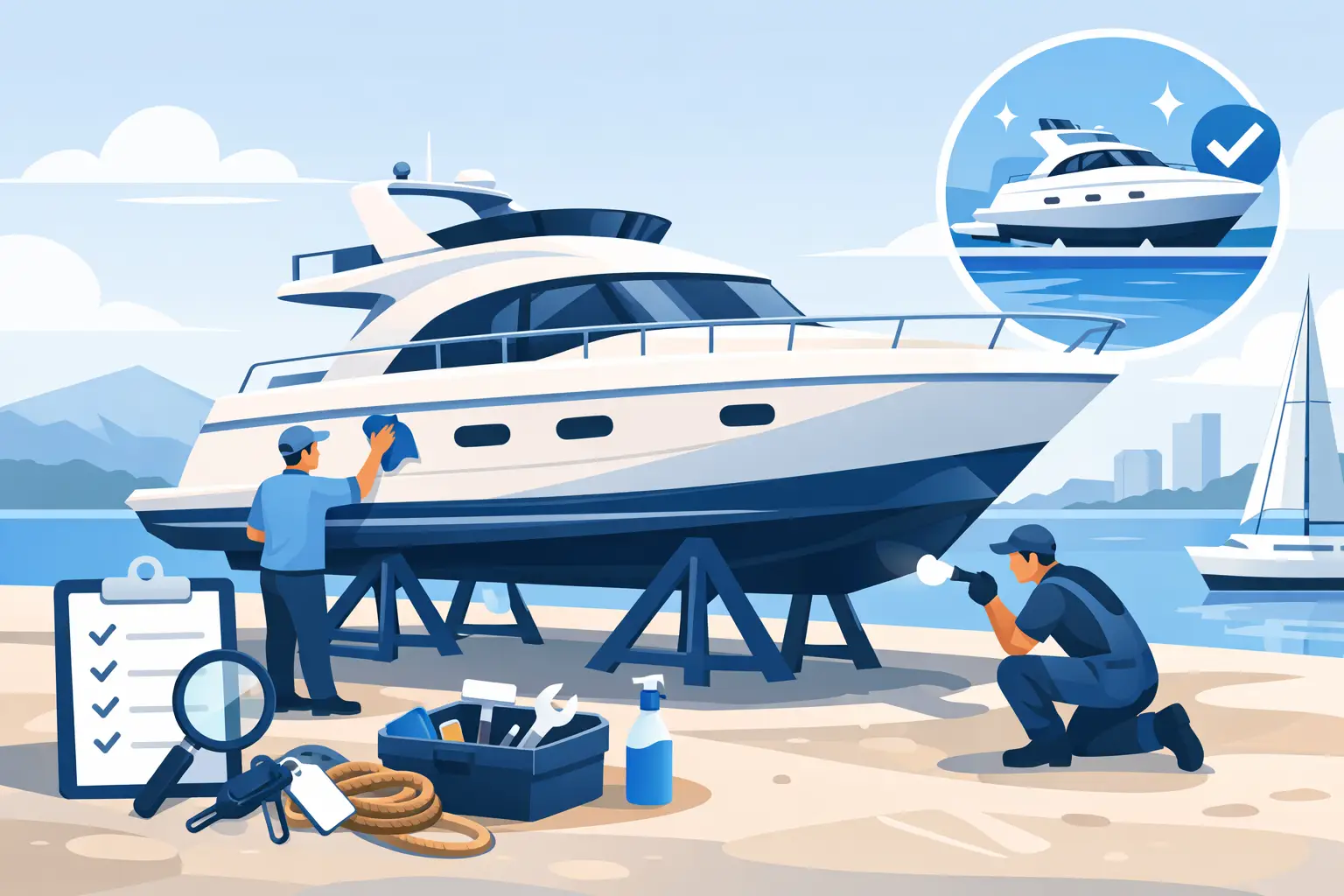
A yacht that lingers on the market rarely has a single problem. More often, it shows a pattern – pricing that misses the market, presentation that feels tired, paperwork that is incomplete, or maintenance history that raises quiet doubts. If you are considering how to prepare yacht for sale, the goal is not simply to list it. The goal is to present a vessel that inspires confidence from the first inquiry through survey and closing.
In the pre-owned luxury yacht market, buyers are not only comparing specifications. They are weighing risk, future maintenance exposure, and the quality of ownership they are stepping into. A well-prepared yacht suggests disciplined stewardship. A poorly prepared one invites negotiation pressure, delays, and sometimes the loss of a serious buyer at the exact moment the deal should move forward.
How to prepare yacht for sale starts with market position
Owners often begin with cosmetics, but preparation starts earlier than that. Before any photography, detailing, or listing copy, your yacht needs to be positioned correctly in the market. That means understanding not just what similar yachts are advertised for, but what condition they are in, how long they have been available, whether they have had meaningful price reductions, and how your yacht compares in pedigree, refit history, equipment, and location.
Overpricing creates a familiar problem in brokerage. The yacht launches at a number that appears optimistic, receives initial attention, then sits. Buyers notice time on market. Brokers notice too. Once a vessel is perceived as stale, even a later price adjustment may not fully restore momentum. Priced correctly from the outset, a yacht can attract stronger early interest, which is where many of the best conversations begin.
For premium motor yachts and sailing yachts, valuation is rarely a simple formula. A major engine rebuild, a recent paint job, updated navigation electronics, and tasteful interior modernization can all improve marketability, but not every dollar spent returns dollar for dollar. The right pricing strategy balances objective value with buyer psychology.
Present the yacht as a cared-for asset
Once market position is defined, visible presentation matters. Buyers of high-value yachts expect to see a vessel that feels properly managed. They are not expecting a brand-new yacht, but they are looking for signs of attentive ownership.
A professional deep clean is the baseline, not the finishing touch. Exterior gelcoat or paint should be polished where appropriate, stainless should be bright, teak should be clean and evenly toned, and glass should be spotless. Interior spaces should feel fresh, uncluttered, and quietly luxurious. Personal items, excess decor, and unnecessary equipment should be removed. The yacht should read as refined and spacious, not overly personalized.
This is where restraint helps. Overstyling can feel artificial. Underpreparing can feel careless. The best presentation highlights the yacht’s volume, light, layout, and condition without distracting from them.
Soft goods deserve more attention than many owners realize. Worn bed linens, dated cushions, stained carpeting, faded sun pads, or tired towels may seem minor, but they influence how buyers assess the overall level of care. If the yacht is in the luxury segment, details at this level matter.
Photography should reflect reality at its best
High-quality photography is not a substitute for preparation. It is the record of it. Images should be taken only after the yacht is fully ready, ideally in favorable weather and lighting conditions. Machinery spaces, helm stations, accommodation, exterior deck areas, galley, crew areas, and tender arrangements all need to be documented clearly.
Poor photography narrows your audience before inquiries even begin. Strong photography broadens it, especially in cross-border sales where many buyers make initial decisions remotely. In a market as international as the East Mediterranean, first impressions often happen long before an onboard visit.
Address maintenance and repairs before listing
One of the most practical answers to how to prepare yacht for sale is also one of the least glamorous: resolve obvious maintenance items before buyers find them. A sticking hatch, nonfunctioning air-conditioning unit, warning light at the helm, water staining, loose hardware, or inoperative passerelle may not end a deal on its own. Together, however, they create a narrative of deferred care.
Not every issue should be corrected without question. If a yacht is older and the owner plans to price it accordingly, there may be cases where major capital works are better disclosed than completed. But clear, visible, manageable defects should usually be dealt with in advance. They are inexpensive compared with the leverage they can hand a buyer during negotiation.
Engine room presentation is particularly important. Buyers and surveyors expect mechanical spaces to be orderly, dry, and accessible. A clean engine room will not hide technical issues from a competent professional, nor should it. What it does communicate is discipline. Labels, service markings, clean bilges, and tidy systems routing all support that impression.
Service records and refit history add real value
Documentation can be as persuasive as appearance. Organized service records, class documents if applicable, invoices for major works, manuals, equipment lists, registration papers, and evidence of refits all contribute to buyer confidence. They reduce uncertainty, and uncertainty is expensive in negotiation.
A yacht with a substantial maintenance file often stands apart from a similar vessel with vague ownership records. Buyers want to know what was done, when it was done, by whom, and why. They also want reassurance that there will be no surprises after closing beyond the normal realities of yacht ownership.
Prepare these records before the yacht goes to market, not after an offer arrives. Delays at this stage can cool momentum and create suspicion where none was necessary.
Be ready for inspection, survey, and sea trial
A serious buyer will move beyond photographs and listing language quickly. Once that happens, your yacht needs to withstand close scrutiny. That means practical readiness for private showings, haul-out, marine survey, and sea trial.
The yacht should be accessible, operational, and presented consistently every time it is shown. Batteries charged, systems functioning, tenders arranged, keys labeled, and technical spaces open for inspection. Crew, if retained onboard, should understand the importance of presentation and discretion. Their professionalism often influences buyer perception more than owners expect.
Survey preparation is not about concealing defects. It is about reducing avoidable friction. If a buyer discovers that basic systems cannot be demonstrated, maintenance records are missing, or safety equipment is out of date, confidence drops. Even when the underlying issue is minor, the emotional effect can be larger.
Sea trial readiness matters equally. Engines should start cleanly, navigation systems should be operational, and the yacht should be capable of demonstrating her intended performance profile with no confusion around controls or onboard systems. A smooth sea trial rarely sells a yacht on its own, but a disorderly one can certainly damage a sale.
How to prepare yacht for sale with the right broker
The brokerage you choose has a direct effect on outcome. Luxury yacht transactions are not improved by broad, impersonal exposure alone. They benefit from disciplined pricing guidance, discreet buyer qualification, intelligent positioning, and careful management of inquiries, inspections, negotiations, and co-broker relationships.
This is especially true for larger pre-owned yachts where every step carries financial and reputational weight. The right broker helps shape the yacht’s market narrative, not just distribute a listing. That includes advising on what to repair, what to disclose, how to time the launch, how to present refit history, and how to protect value during negotiation.
For many owners, discretion is as important as speed. A bespoke brokerage approach serves that need better than a volume-driven model. AlphaOceanic, for example, operates in that space of tailored seller representation, where preparation, positioning, and cross-border buyer access are treated as part of one strategy rather than separate tasks.
Timing matters, but readiness matters more
Some owners wait for the ideal season before listing. Timing does matter, particularly in regional markets where cruising calendars affect demand. But waiting for a better month will not fix a yacht that is underprepared. A vessel that enters the market in strong condition, with proper records and realistic pricing, generally performs better than one that arrives at the theoretically perfect moment but lacks readiness.
It also helps to think in terms of transaction timing rather than listing timing alone. If your yacht is likely to attract an international buyer, there may be additional coordination around flag, tax position, registration, and handover logistics. Preparing these elements in advance reduces delays later, when buyer commitment is strongest but patience may be shortest.
Selling well is rarely the result of one dramatic improvement. It is the result of many precise decisions made before the market ever sees the yacht. When the vessel is priced intelligently, presented with care, documented properly, and supported by expert brokerage guidance, buyers respond with more confidence and better intent. That is what preparation should achieve – not just a listing, but a sale process worthy of the yacht itself.