

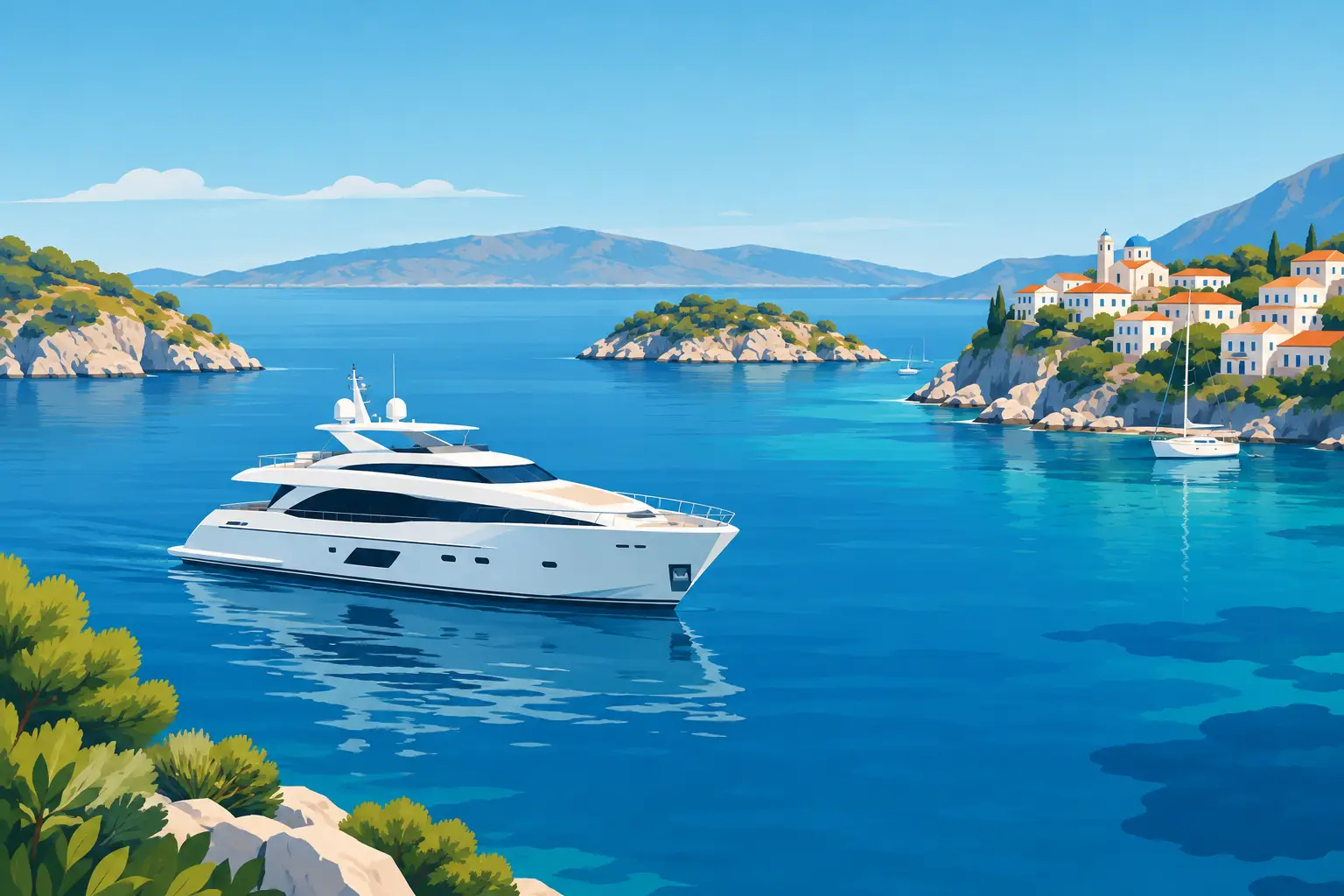
A yacht that excels between Cycladic anchorages can be a poor fit for a long offshore passage, and a vessel built for speed may bring compromises in fuel use, noise, and volume. The best yachts for island hopping are not defined by length alone. They combine practical range, manageable draft, dependable systems, comfortable outdoor living, and the confidence to arrive at the next island on your own terms.
For buyers considering the East Mediterranean, the question is especially relevant. A typical season may include short morning runs, afternoons at anchor, crowded town quays, Meltemi conditions, and occasional longer passages between island groups. The right yacht should make this rhythm feel effortless while preserving the privacy and standards expected of a serious ownership experience.
What Makes a Yacht Right for Island Hopping?
Island hopping rewards versatility. You may leave a protected marina before breakfast, spend the day in a remote bay, take the tender ashore for dinner, and move again before the wind builds. This calls for a yacht that is easy to handle, genuinely comfortable at anchor, and supported by machinery that has been maintained to a high standard.
Range matters, but it should be assessed realistically. In the Aegean, fuel availability is generally good, yet the most appealing itineraries are often those that do not require planning every day around a fuel stop. A yacht with efficient cruising consumption and a sensible fuel capacity gives an owner greater freedom to choose quieter anchorages and adjust plans when weather changes.
Draft is equally influential. Deep-draft sailing yachts offer exceptional upwind ability and a composed motion, but may limit access to shallow coves or require more careful anchoring. Motor yachts with moderate draft are often easier to enjoy across a broad mix of Greek islands. There is no universal answer – the preferred itinerary, crew experience, and appetite for sailing should guide the decision.
The Best Yacht Types for Island Hopping
Flybridge Motor Yachts
For many owners, a flybridge motor yacht is the most complete answer to Mediterranean island cruising. It provides distinct social areas, strong visibility while underway, and the elevated outdoor space that becomes central to life on board in warm climates. A 70- to 95-foot flybridge yacht can accommodate family and guests in meaningful comfort while remaining practical for the marinas, quays, and anchorages encountered throughout Greece.
The flybridge is not simply an entertaining feature. It gives the captain a commanding position for close-quarters maneuvering and creates a natural place to enjoy an arrival, sunset, or passage between islands. Look for a protected helm, generous seating, a well-designed wet bar, and shading that can be adjusted throughout the day.
The trade-off is windage and, depending on the design, a slightly higher center of gravity than a sportier profile. Buyers should also examine whether the flybridge remains comfortable in stronger winds, rather than judging it only while a yacht is stationary at a boat show.
Semi-Displacement Motor Yachts
Owners who value comfort underway often favor semi-displacement yachts. These vessels commonly cruise at moderate speeds with a softer ride, greater range, and more restrained fuel consumption than high-performance planing yachts. They are well suited to a considered cruising program that includes long lunches at anchor, multiple weeks aboard, and occasional passages when the weather is less than perfect.
A semi-displacement yacht in the 80- to 110-foot range can offer remarkable interior volume, substantial tankage, and systems designed for extended use. Stabilizers, whether underway or at anchor, are particularly valuable for guests who prioritize calm nights in open bays.
The compromise is speed. If the intention is to cover large distances quickly or frequently move between far-separated island groups in one day, a faster planing yacht may be more appropriate. Yet for owners who see the voyage as part of the pleasure, semi-displacement remains one of the most compelling formats available.
Sport and Open Motor Yachts
A sport yacht or open yacht suits buyers who want an energetic, design-led experience and the ability to reach a new destination quickly. These yachts are particularly attractive for couples, smaller families, or owners who favor day cruising with selected overnight stays. Their lower profile can make them visually striking and easier to handle in certain wind conditions.
For island hopping, the important question is whether the yacht has enough practical protection from sun and spray. A beautiful open cockpit is less appealing after several hours of exposure in midday heat or a brisk afternoon sea. Seek substantial shade, comfortable seating, a capable galley, proper guest cabins, and a tender solution that does not compromise the usable deck area.
Fuel consumption deserves close review. High cruising speeds offer freedom, but that freedom comes at a cost. An experienced broker can help compare real operating data rather than relying on optimistic brochure figures.
Sailing Yachts and Performance Cruisers
A sailing yacht brings a different quality to island hopping. Under sail, even familiar passages become quieter and more connected to the landscape. Modern performance cruisers and luxury sailing yachts can provide impressive comfort, refined interiors, and powerful handling for owners who want the journey itself to be central to the itinerary.
For the East Mediterranean, a yacht with straightforward sail handling, a protected cockpit, reliable air conditioning at anchor, and adequate watermaker capacity can transform the ownership experience. Owners should be candid about how they intend to use the yacht. A highly technical performance yacht may be rewarding with an engaged owner and experienced crew, while a more forgiving cruising design will better support relaxed family use.
Draft, mast height, and tender stowage require particular attention. So does the layout below deck. Sailing yachts often use interior volume differently from motor yachts, and guests may notice that distinction during longer stays aboard.
Specifications That Matter More Than Brochure Speed
The most useful yacht for island hopping is usually not the one with the highest top speed. It is the one whose specifications support reliable, unhurried days on the water.
Stabilization should be a priority for motor yachts, especially for owners who plan to anchor frequently. Fin stabilizers improve comfort underway, while gyro stabilizers can be highly effective at rest, depending on vessel size and intended operating profile. The ideal solution depends on the yacht, but the absence of stabilization should be viewed carefully on a larger family yacht.
A capable tender is another essential consideration. In many anchorages, the tender is the connection between the yacht and the island. It should be easy to launch, large enough for guests, and specified for the kind of shore access the owner expects. Water toys, storage, deck crane arrangements, and swim-platform access all influence how enjoyable a day at anchor becomes.
Air conditioning, generator capacity, battery management, watermakers, refrigeration, and anchoring equipment may seem less glamorous than a polished salon or new upholstery. In practice, they are often more consequential. A yacht with refreshed technical systems can deliver more confidence and less disruption than a newer-looking vessel with deferred maintenance.
Choosing Size for Your Cruising Style
For couples or a small family, a yacht between 55 and 75 feet can be an excellent island-hopping platform. It offers meaningful accommodation while remaining relatively straightforward to berth, crew, and operate. At this size, thoughtful layout matters greatly: a proper full-beam master, shaded deck space, and convenient tender access can be more valuable than an extra knot of speed.
Between 80 and 100 feet, owners gain more privacy, stronger crew separation, larger tenders, and a notably more relaxed guest experience. This range is often ideal for multigenerational family cruising or hosting friends without making the yacht feel operationally excessive.
Above 100 feet, the experience becomes increasingly tailored. Greater volume supports dedicated crew, more elaborate entertainment spaces, expanded wellness features, and longer autonomous cruising. However, larger yachts also require a more deliberate approach to crewing, berth selection, operating budgets, and technical oversight. Size should serve the owner’s intended life on board, not simply a perception of status.
Buying a Pre-Owned Yacht With Island Hopping in Mind
A well-chosen pre-owned yacht can offer exceptional value, particularly when it has been consistently maintained and thoughtfully refitted. The focus should extend beyond build year and cosmetic presentation. Review service records, stabilizer history, generator hours, engine surveys, tank condition, air-conditioning performance, and evidence of regular use.
The ideal vessel is one with a credible ownership story. A yacht that has been actively cruised, professionally managed, and upgraded where necessary is often a more secure proposition than one that has spent extended periods inactive. Sea trials should include more than a brief high-speed run. Assess visibility, noise levels, vibration, maneuverability, ride comfort, and the behavior of onboard systems under normal load.
For buyers seeking the best yachts for island hopping, AlphaOceanic provides the value of direct, discreet guidance through this evaluation. The right acquisition is not merely a beautiful yacht at an attractive price. It is a vessel whose condition, specification, and operating profile align with the way you wish to travel.
The most memorable island itineraries are rarely dictated by a schedule. Choose a yacht that gives you the range to linger, the draft to explore, and the comfort to make each anchorage feel like your own private address on the water.