

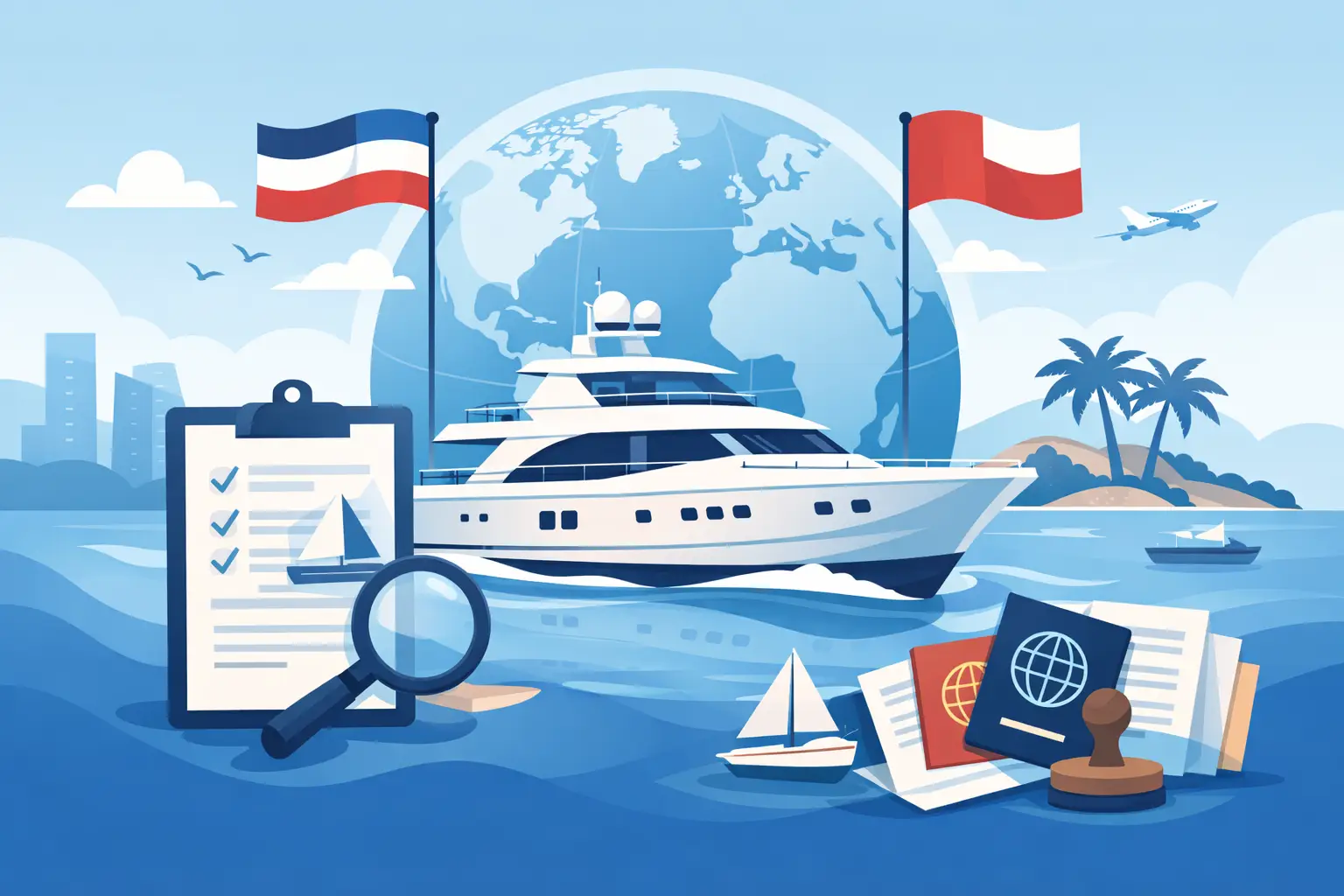
A yacht can be found in Italy, surveyed in Greece, purchased through a holding company in Delaware, and flagged in the Cayman Islands. That is normal in the upper end of the market. What is not normal is treating registration as an administrative detail to settle after the contract is signed. This international yacht registration guide is designed for buyers and owners who want the vessel’s legal structure, operating profile, and long-term resale position considered from the beginning.
The right registration supports the way a yacht will actually be used. The wrong one can complicate financing, charter plans, VAT treatment, crew employment, insurance, and the eventual sale. There is no universally best flag. There is only the flag and ownership structure that properly serve a particular yacht, owner, and cruising plan.
Why Yacht Registration Deserves Early Attention
A yacht’s flag state is the country under whose laws it is registered. It determines the vessel’s nationality and establishes the regulatory framework governing technical standards, safety certification, radio licensing, crew documentation, mortgage registration, and certain operating requirements.
For a private buyer, the question often begins with a simple preference: where should the yacht be registered? In practice, the better question is more detailed: who will own the yacht, where will it be based, will it be private or commercial, who will operate it, and where will it cruise?
A 35-meter motor yacht used privately by a family in the East Mediterranean has different registration considerations from a sailing yacht intended for occasional Mediterranean charter. Similarly, a U.S. owner keeping a vessel in Florida may have a different answer from a European family office purchasing a yacht that will remain principally in Greece, Turkey, Croatia, or Italy.
Registration should therefore be addressed alongside the letter of intent, purchase agreement, tax advice, and technical due diligence. It is not a substitute for legal or tax counsel, but it is one of the central workstreams in a properly managed cross-border transaction.
Choosing the Right Flag for Your Yacht
Well-established yacht registries are often selected for their international recognition, efficient administration, mature mortgage frameworks, and familiarity with commercial yachting. Common choices in the luxury market include the Cayman Islands, Malta, the Marshall Islands, the Isle of Man, the United Kingdom, and several European national registries. U.S. documentation may also be appropriate for qualifying owners and vessels.
The choice depends on substance, not prestige alone. A respected registry can provide confidence to lenders, insurers, buyers, and brokers at resale, but it must also fit the ownership structure and intended use.
Private Use or Commercial Operation
This is the first operational distinction. A yacht registered for private pleasure use is generally not permitted to trade as a charter yacht. A commercial yacht must comply with the flag state’s commercial code, survey regime, manning requirements, and safety standards. The transition from private to commercial use can be significant, especially for an older pre-owned vessel that requires upgrades to meet current requirements.
Some owners intend to charter only selectively to offset annual operating costs. That can be commercially sensible, but it should be planned before acquisition. Charter activity can affect the appropriate flag, VAT position, insurance, crew contracts, and the practical scope of a refit. It is far preferable to identify these implications during due diligence than after taking delivery.
Where the Yacht Will Cruise
A flag is not the same as a yacht’s cruising authorization. A Cayman-flagged yacht, for example, may cruise internationally, but local rules still apply in every country visited. These may involve customs entry, temporary importation, cruising permits, local taxes, charter licensing, and restrictions on commercial activity.
For yachts spending substantial time in the European Union, VAT status requires particularly careful treatment. A non-EU-owned yacht may be eligible for temporary admission under specific conditions, but the facts matter: ownership, residency, vessel use, and time in EU waters can all affect the analysis. A change in owner or beneficial owner may alter the available treatment.
The East Mediterranean adds another layer of operational reality. A yacht moving regularly among Greece, Turkey, Croatia, Montenegro, Italy, and Cyprus needs a clear documentary record and a registration strategy that supports efficient port-to-port operations. Experienced local coordination is valuable because procedures can differ materially between jurisdictions.
Ownership and Financing
Many larger yachts are held through a special-purpose company rather than in an individual’s personal name. This may support privacy, succession planning, asset administration, financing, or tax planning. The company’s jurisdiction, directors, beneficial ownership records, and authority to buy and register the yacht must be established properly.
If finance is involved, the lender will usually have firm requirements regarding the flag state and the ability to record a mortgage. A registry with a clear and internationally recognized mortgage system can be essential. Buyers should not assume that a preferred registration jurisdiction will satisfy every lender, nor that every ownership vehicle will be acceptable to a registry.
Documents Required for International Yacht Registration
The precise filing package varies by registry, yacht age, tonnage, use, and ownership structure. Yet most registrations begin with the same core evidence: proof of ownership, proof of the owner’s eligibility, and reliable technical particulars for the vessel.
A buyer will commonly need a bill of sale, builder’s certificate or previous registration history, deletion certificate from the former flag, proof that the yacht is free of registered encumbrances or that approved releases are in place, and corporate documents where the buyer is a company. The registry may also request a certificate of survey, tonnage measurement, evidence of insurance, radio documentation, and details of the yacht’s managing company.
For pre-owned yachts, documentation should be reviewed before closing rather than collected hurriedly afterward. A missing chain-of-title document, an unresolved mortgage, or an incomplete deletion process can delay delivery and create unnecessary exposure. The same is true when the yacht has changed flag several times during its life.
The Deletion Certificate Matters
Before a yacht can generally be permanently registered under a new flag, it must be deleted from its former registry. The deletion certificate confirms that the prior registration has ended and, depending on the circumstances, that recorded mortgages have been discharged or transferred appropriately.
Timing matters. The buyer, seller, lender, closing agent, and registry must coordinate the deletion and new registration so the yacht is not left in an uncertain position. In many transactions, a provisional registration provides a practical bridge while original documents, measurements, and final certificates are processed. Whether this is available, and for how long, depends on the registry.
Registration, Survey, and Technical Compliance
Registration is closely connected to the yacht’s technical status. A flag state may require inspections or certificates that reveal issues not immediately apparent in a sales brochure or even a standard pre-purchase survey.
For commercial operation, the requirements may include life-saving appliances, fire detection and suppression systems, navigation equipment, pollution-prevention records, crew accommodation standards, and stability documentation. A yacht built under a previous rule set may need modifications before commercial registration is granted.
This is where technical due diligence and registration planning should meet. The buyer’s surveyor can identify condition concerns, while a flag-state specialist can assess whether the vessel’s certificates and equipment align with the intended operational category. Neither review replaces the other.
A favorable purchase price can lose its appeal quickly if the yacht requires extensive compliance work before it can charter or enter a chosen registry. Conversely, a well-documented yacht with current class records, orderly certification, and a proven commercial history may justify stronger market interest at resale.
The Effect on Resale and Ongoing Ownership
A yacht’s registration is not fixed forever, but changing flags is neither cost-free nor effortless. It can trigger new inspections, documentation work, radio re-licensing, and a review of the yacht’s operating status. Buyers should consider the likely resale audience before choosing a highly specialized or less familiar registry.
A transparent ownership structure and clean registration file are assets when the time comes to sell. Sophisticated buyers and their advisers will examine title, liens, VAT evidence, class status, flag history, and compliance records. Orderly documentation reduces friction and supports a more credible sale process.
For this reason, owners should maintain an organized vessel file throughout ownership. Keep originals and certified copies secure, record significant refits and equipment changes, renew certificates before they become urgent, and ensure the registered owner remains aligned with the broader ownership structure. A corporate restructuring that is not reflected in yacht records can create avoidable complications later.
A Measured Approach Before Closing
An international registration plan should be set before funds are released and delivery is accepted. The practical sequence is to define intended use, confirm the owning entity, select the appropriate flag, review technical eligibility, verify title and deletion requirements, and coordinate the closing timetable around the registry process.
For high-value yacht acquisitions, this work benefits from direct coordination among the buyer’s broker, maritime counsel, tax adviser, surveyor, manager, insurer, and, where applicable, lender. Each party sees a different part of the transaction. The buyer is best served when those views are brought together early and handled with discretion.
AlphaOceanic approaches cross-border yacht purchases with that wider perspective: the yacht itself matters, but so do the structures that allow an owner to enjoy, operate, and eventually sell it with confidence. A carefully selected flag is not simply a stern detail. It is part of the foundation of sound yacht ownership.