

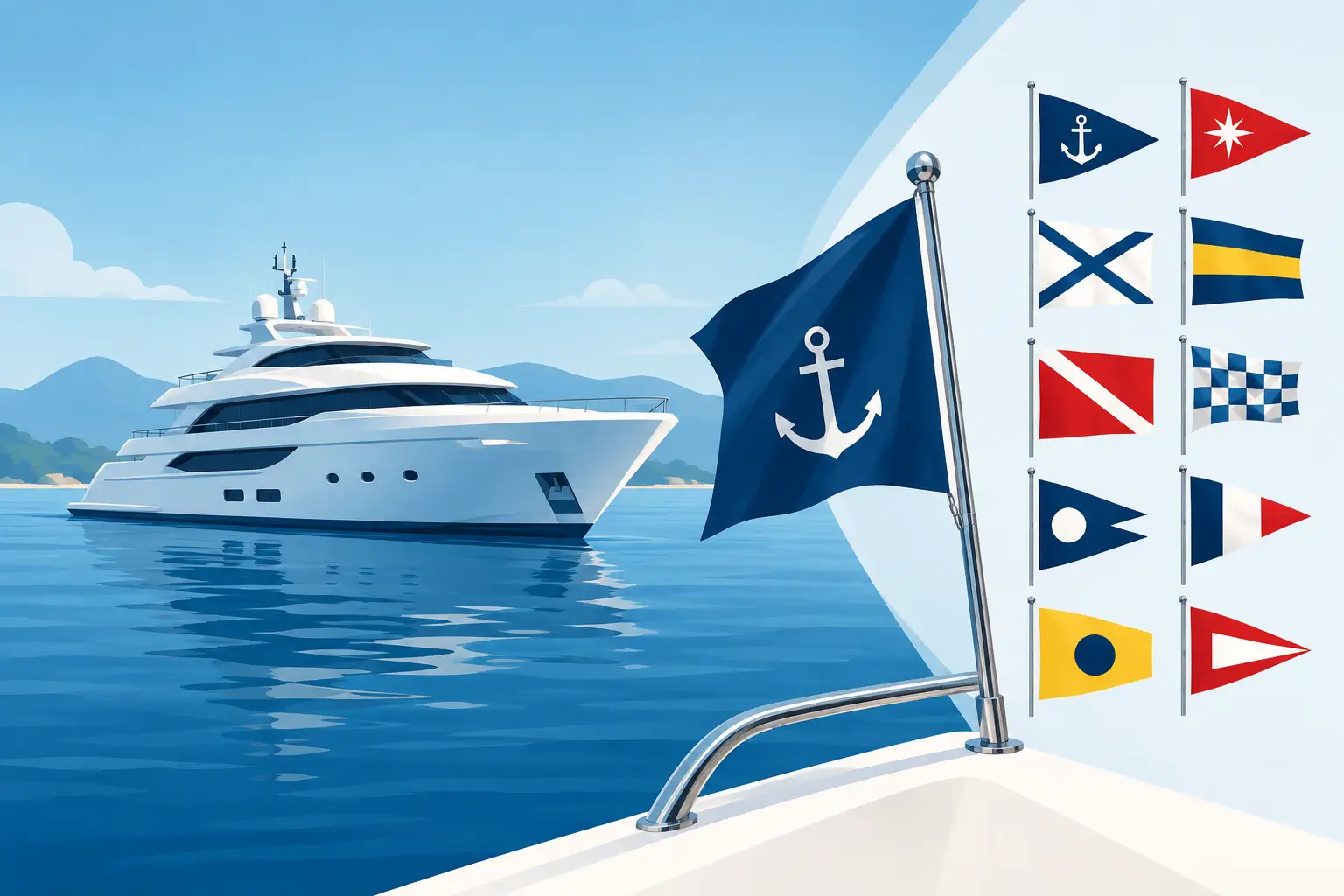
A yacht’s flag is far more than the ensign flown from its stern. It establishes the vessel’s legal nationality, the regulatory framework under which it operates, and often the practical ease of owning, using, financing, chartering, and eventually selling it. For buyers considering a cross-border acquisition, knowing how to select yacht flag is a central part of the purchase strategy, not an administrative detail to leave until closing.
The right registration should reflect the yacht’s intended use and ownership structure from the outset. A flag that is well suited to a privately used 30-meter motor yacht based in Greece may not be the right solution for a commercially operated yacht cruising between the Mediterranean, Caribbean, and United States. The decision deserves the same considered attention as the technical survey, title review, and negotiations.
How to Select Yacht Flag Before You Buy
The first question is simple: how will the yacht actually be used? The answer is rarely as simple.
A private yacht used solely by its beneficial owner, family, and invited guests has very different requirements from a yacht that will charter for revenue. A yacht intended for commercial operation must satisfy the flag state’s commercial yacht code, manning standards, safety rules, inspection requirements, and recordkeeping obligations. A change in use later can be possible, but it may require upgrades, new certification, and a more demanding compliance program.
Cruising geography matters just as much. Owners planning to remain principally in the East Mediterranean should consider how a proposed flag is recognized by local authorities, whether it supports the intended VAT and customs position, and how readily documentation can be produced during port-state inspections. For a yacht traveling globally, the strength and reputation of the flag state becomes even more significant.
At AlphaOceanic, the registration conversation is normally introduced early in a transaction because it can influence the acquisition structure, delivery timetable, operating budget, and the documents required from seller and buyer. It is most effective when the broker, maritime lawyer, tax adviser, and yacht manager are working from the same operational plan.
Begin With Ownership and Eligibility
Every registry has rules governing who may own a yacht registered under its flag. Some accept ownership by individuals of particular nationalities or residence status. Others permit ownership through companies formed in approved jurisdictions. Certain registries are especially accustomed to corporate ownership, trusts, leasing structures, or ownership vehicles used by family offices.
This is where a yacht owner should distinguish between the registered owner and the beneficial owner. The registered owner appears on the certificate of registry and is the legal entity that owns the vessel. The beneficial owner is the individual or family that ultimately controls and enjoys the yacht. In a high-value transaction, that distinction may affect privacy, succession planning, financing, insurance requirements, and due diligence obligations.
There is no universally superior ownership structure. Direct personal ownership can be straightforward, while a company may offer administrative flexibility and continuity. Yet a company also creates annual maintenance obligations, accounting requirements, and disclosure considerations. The appropriate structure depends on the owner’s residence, tax position, citizenship, family planning, and the yacht’s planned activity. Specialized legal and tax advice is essential before incorporating an entity or committing to a flag.
Compare the Four Issues That Shape Flag Choice
A careful flag comparison should go beyond registration cost. The least expensive registry at entry can become costly if it creates friction in operation, financing, or resale. In practice, four areas deserve close review:
- Regulatory standing and safety oversight. Established registries with a credible international reputation can support smoother port-state inspections, insurer confidence, and professional yacht management. Review their safety codes, survey intervals, crew standards, and the quality of their administrative support.
- Private or commercial status. Confirm whether the registry accommodates private use, commercial use, or both, and understand what is required to move between classifications. A commercial designation can create charter opportunities, but it also introduces compliance and operational discipline.
- Tax, customs, and cruising implications. VAT, importation, temporary admission, and local cruising permissions are highly fact-specific. The flag itself is only one element. Ownership, beneficial use, the yacht’s location, and the owner’s residency can all be decisive.
- Mortgage and resale practicality. If financing is contemplated, lenders may prefer registries with established mortgage recording systems. For future resale, a familiar and well-documented flag can make title review more efficient for an international buyer.
These points should be assessed as a package. A registry may be excellent for commercial charter but unnecessarily burdensome for a yacht that will remain strictly private. Another may be attractive for a particular ownership vehicle yet less suitable if the yacht will be financed or operated with a multinational crew.
Private Registration Versus Commercial Registration
Private registration is generally appropriate when the yacht is used only for non-revenue purposes. The owner may invite guests aboard, but the operation must not be structured as a commercial charter. The requirements are often less extensive than those imposed on a commercial yacht, although the yacht must still meet applicable safety, radio, and navigation rules.
Commercial registration allows the yacht to charter legally, subject to the relevant code and licensing requirements. It may require class compliance at certain sizes or ages, approved safety equipment, trained crew, formal safety management procedures, surveys, and periodic inspections. For a yacht entering the charter market, the commercial route can protect both the owner and guests by placing the operation within a recognized regulatory framework.
The trade-off is clear. Commercial status may create income potential and improve market appeal for charter-minded buyers, but it demands higher operating discipline and can limit casual owner use in certain circumstances. Buyers should not assume that a yacht advertised as charter-capable is automatically ready for immediate commercial operation under their chosen flag.
Consider the Flag State’s Service, Not Just Its Name
A prominent flag state may carry considerable market recognition, but the practical service behind the registry matters daily. Ask how quickly provisional registration can be issued during a purchase, what documents are required for permanent registration, whether representatives are available in the yacht’s operating time zone, and how efficiently the registry handles changes of ownership, mortgage entries, crew endorsements, and replacement certificates.
This becomes particularly relevant at closing. A yacht cannot simply be delivered with an informal understanding that registration will be addressed later. The sale process must coordinate deletion from the seller’s registry, evidence of clear title, execution of the bill of sale, insurance placement, and provisional or permanent registration for the buyer. Delays can affect departure plans, crew employment, and the validity of onboard documentation.
For yachts operating internationally, the flag state’s network of surveyors and authorized representatives is also worth examining. A registry that can efficiently support surveys in Mediterranean shipyards, the United States, and the Caribbean offers tangible value over the life of the yacht.
Do Not Treat Tax Planning as a Flag Decision Alone
Flag selection is often discussed alongside VAT and customs planning, particularly for yachts cruising in European waters. However, the flag does not independently determine tax treatment. The legal owner’s place of establishment, the beneficial owner’s residency, the yacht’s import status, the location and nature of use, charter activity, and the applicable local rules must all be evaluated together.
For example, an EU flag does not automatically resolve VAT questions, just as a non-EU flag does not automatically prevent a yacht from cruising in the Mediterranean. Temporary admission and other customs arrangements can be available in specific circumstances, but their suitability depends on facts that must be confirmed before the yacht enters or remains in a jurisdiction.
A sound approach avoids promotional shortcuts and relies on written advice from qualified advisers familiar with the relevant countries. This is particularly important when a yacht will spend meaningful time in Greece, Italy, France, Croatia, Turkey, or other jurisdictions with differing local practices and enforcement priorities.
Think Ahead to Crew, Insurance, and Resale
The chosen flag has operational consequences long after delivery. It can affect the crew contracts and qualifications required aboard, payroll arrangements, medical certification, radio licensing, and procedures for maintaining statutory records. A capable yacht manager can translate those obligations into a workable annual compliance calendar, but the underlying requirements begin with the flag and operational classification.
Insurance underwriters will also consider the yacht’s registration, class status where applicable, cruising area, management arrangements, and crew profile. A respected registry does not replace prudent operation, but it can provide insurers with confidence that the vessel is maintained within a recognized framework.
Finally, think about the buyer who may acquire the yacht from you in three or five years. A clean chain of title, orderly registration history, current certificates, and a flag that is familiar to international brokers, lenders, and surveyors can reduce uncertainty at resale. This does not mean choosing a flag solely for market perception. It means avoiding a structure that solves a short-term problem while narrowing the future buyer pool.
A Disciplined Decision Before Closing
The best flag is the one that fits the yacht’s real life: the ownership structure, intended cruising, private or commercial use, crew model, financial arrangements, and eventual exit plan. It should be selected before a binding purchase timetable leaves little room to adjust the structure properly.
Before signing final documents, ask your advisers to map the proposed yacht operation on paper – where it will cruise, who will own it, who will use it, whether it will charter, and how it may be sold. That disciplined exercise often reveals the right registration path long before the yacht reaches her first berth under new ownership.